VIETNAM CHAMBER OF COMMERCE AND INDUSTRY
Liên Đoàn Thương Mại Và Công Nghiệp Việt Nam
Mon, May 18, 2026, 15:04:00
 A corner of former Binh Dinh province which was merged into Gia Lai province last July to form the new Gia Lai. Photo courtesy of Dau tu (Investment) newspaper.
The model offers many key advantages and has been successfully implemented in China, Su Shang’s founder Yan Jiehe told Chairman of the Gia Lai People’s Committee Pham Anh Tuan at a Friday working session.
Yan noted that under the model, contractors provide end-to-end solutions ranging from financing and engineering design to equipment procurement, construction, supervision, project handover, and maintenance.
He said the company hopes to secure support from local authorities and relevant agencies, and pledged to mobilize sufficient resources and cut project completion times by as much as 50% from planned schedules.
Yan stressed that the projects would help the locality optimize investment costs, boost budget revenue, ease congestion, reduce pollution, and improve public satisfaction.
According to the executive, Su Shang has signed investment cooperation agreements with a number of Vietnamese localities and is advancing plans to establish a Vietnam-based construction company.
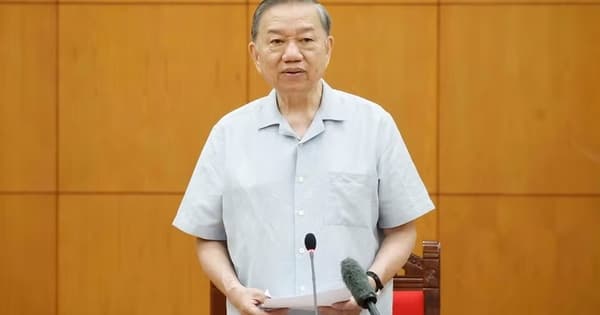
 Su Shang’s founder Yan Jiehe. Photo courtesy of Vietnam News Agency.
For his part, Tuan spoke highly of Su Shang’s scale, capabilities and experience in infrastructure investment.
The provincial chairman said Gia Lai is prioritizing investment in major infrastructure needs, including transport, irrigation and urban infrastructure projects such as transport links, water reservoirs serving production, and wastewater drainage networks.
Gia Lai is reviewing existing projects to allocate appropriate funding, while projects requiring substantial resources will be introduced directly to capable and experienced investors, he added.
Recognizing the advantages of the FEPCO model, Tuan suggested Su Shang submit a proposal to the Vietnamese government for consideration and policy approval to establish a legal basis and facilitate implementation.
He also instructed relevant agencies to closely coordinate with the group in exploring potential cooperation opportunities.
Beyond Gia Lai, Su Shang has expanded its activities across several northern and north-central provinces, including Bac Ninh, Hanoi, Quang Ninh, Hai Phong, Cao Bang, Nghe An, and Ha Tinh.
It plans to invest at least $3.5 billion in infrastructure projects in the northern province of Bac Ninh, a neighbor of Hanoi, over the next five years. At an April meeting with Bac Ninh authorities, the developer signaled readiness to bring capital, technical expertise, and project execution capabilities to support the locality’s infrastructure ambitions.
 A corner of former Gia Lai province. Gia Lai and Binh Dinh provinces were merged last July to form the new Gia Lai. Photo courtesy of the government's news portal.
Also on Friday, Gia Lai Chairman Tuan held a separate working session with a delegation from KDI Holdings, a multi-sector Vietnamese corporation, led by vice chairman Dang Anh Mai.
Evolving from a group primarily focused on investment and finance, KDI Holdings has expanded its operations into diverse sectors, including real estate, premium European interiors, entertainment and the arts, luxury yachting, STEM education, and high-tech agriculture.
The company is currently developing multiple projects across Hanoi, Ho Chi Minh City, Dong Nai, Quang Ninh, Khanh Hoa and Dak Lak, among other localities.
Key projects include the Vega City coastal arts, resort and entertainment complex in the south-central province of Khanh Hoa, the development of KDA fresh banana cultivation areas and export branding in Dak Lak, as well as STEM (science, technology, engineering and mathematics) innovation spaces and digital citizenship education programs nationwide.
Mai said Gia Lai offers strong growth potential, supported by its land availability, natural conditions, agriculture, eco-tourism, urban development prospects, and labor resources.
The executive also praised the province's improving investment environment and local leadership's commitment to driving economic growth, attracting investment, and raising living standards, saying they were key factors behind KDI's interest in exploring investment opportunities in the province.
KDI called on Gia Lai authorities to create favorable conditions for the group to conduct research/surveys and put forward project proposals.
Specifically, in the high-tech agriculture sector, KDI proposed investment in large-scale fruit growing areas integrated with livestock farming projects, requiring an estimated 2,000-3,000 hectares of land, with the goal of developing a production, processing and agricultural export hub for the Central Highlands.
In education, the company proposed coordination in the implementation of STEM-related initiatives in the province and called on Gia Lai authorities to support plans to develop a high-quality multi-level STEM school system, a STEM vocational college, and a science experience center, with an estimated land requirement of about 10 hectares.
In response, Tuan instructed the Department of Agriculture and Environment to review and identify suitable areas for the company to survey and study for the development of raw material zones and high-tech agriculture projects. The department was also tasked with supporting the company in preparing documentation and completing investment procedures.
The Department of Education and Training, together with relevant agencies, was instructed to hold detailed discussions with KDI on cooperation in STEM education, digital capabilities and artificial intelligence (AI), as well as investment support mechanisms and implementation plans in the time ahead.
In July 2025, Binh Dinh and Gia Lai provinces were merged to form the new Gia Lai which borders Dak Lak, Quang Ngai, Cambodia, and the East Sea.