VIETNAM CHAMBER OF COMMERCE AND INDUSTRY
Liên Đoàn Thương Mại Và Công Nghiệp Việt Nam
Tue, Feb 24, 2026, 14:47:00
 A corner of Danang. Photo by The Investor/Nguyen Tri.
Building data infrastructure
In recent years, Danang has ramped up investment to develop integrated IT and digital infrastructure, laying the groundwork for its ambition to become a smart city. The city currently hosts seven data centers.
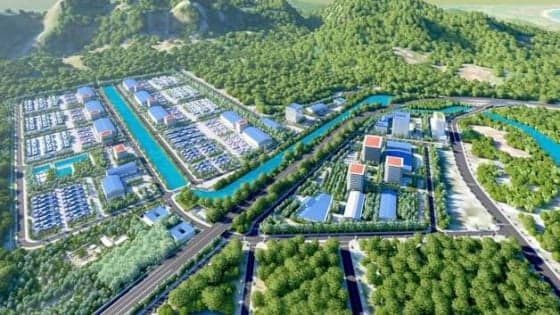
Last year, two regional-scale data centers broke ground at the Danang Hi-Tech Park. These include the International Data Center (IDC) developed by International Data Center JSC, with a capacity of 1,000 racks and 18 MW of power at an investment cost of VND800 billion ($30.8 million), and an AI data center by Global Telecommunications and Infrastructure Group, also with 1,000 racks, 10 MW of capacity and investment of $200 million.
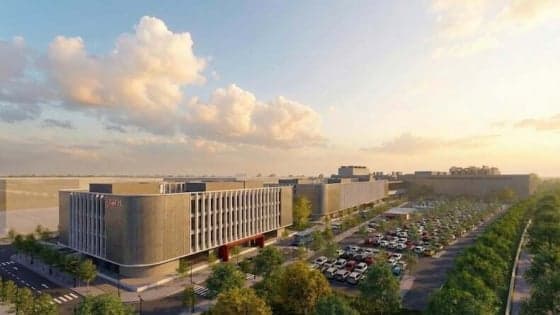
In Q1/2026, Viettel is expected to begin construction of a data center at the Hoa Khanh Industrial Park. The facility is set to become the largest Tier 3-standard data center in central Vietnam, with a capacity of 14 MW, supporting the region’s digital transformation.
Danang is also expanding its 5G network, targeting coverage of 95% of urban residential areas by the end of 2025, while working to eliminate connectivity gaps in mountainous and border communes.
The city hosts the Hoa Hai landing station, a key international fibre-optic gateway for Vietnam, connecting the SWM3 and APG undersea cable systems. Its modern and extensive telecommunications infrastructure ensures high-speed and stable internet connectivity.
Data-driven governance
Danang is implementing five major projects in science-technology, innovation, and digital transformation, including pilot initiatives on digital twins, a data exchange linked to the development of an international financial center, a blockchain network for managing digital assets, a smart Lien Chieu port model, and a smart free trade zone model.
The city has also taken a leading role in data-driven governance through its Intelligent Operations Centre (IOC). According to Vice Chairman of the Danang People’s Committee Ho Quang Buu, the city has upgraded and expanded its urban network infrastructure, data centers and shared online meeting systems, and has completed and put into operation the IOC.
The city’s open data portal had provided more than 1,500 datasets across multiple sectors as of December 2025. Core databases have been standardized, and shared data repositories established, enabling the deployment of smart city applications based on digital platforms and data.
“Danang has developed 15 groups of smart urban services, featuring 160 types of data and charts and 52 types of alerts on the IOC,” Buu said. “These are being used to monitor, analyze and issue real-time warnings, supporting decision-making by city leaders and local authorities, while also providing information and services to residents.”
Laying the groundwork for the digital economy
From an early stage, Danang’s authorities adopted a new approach, treating data as an asset to be effectively leveraged in smart city management, thereby laying the foundation for the digital economy and new growth drivers.
The city has issued a digital infrastructure development plan for 2025-2030, outlining the goal of building ultra-large-capacity, ultra-wideband, green, smart, open and secure digital infrastructure to support the digital economy, digital society, and digital government, while ensuring national defence and security.
Danang aims to attract investment in three new “green” data centers meeting international standards, create favorable conditions for digital infrastructure development, and draw major investors to serve as anchors for the sector.
The city has also approved two large-scale infrastructure and platform projects with central government funding, including one focused on expanding digital and cloud computing infrastructure to support big data and artificial intelligence, and another aimed at developing digital platforms for proactive digital governance.
A resolution on special policy mechanisms for Danang recently adopted by the parliament includes support for strategic technologies, including large-scale data centers.
According to experts, information technology and electronics-telecommunications industries - underpinned by data infrastructure - are expected to become core economic sectors, with annual revenue growth targeted at two to 2.5 times the city’s GRDP growth rate.
“The development of data centers provides the foundation for core technologies such as AI, big data, blockchain, and fintech, supporting the digital economy and the building and operation of a smart city,” Vice Chairman Ho Quang Buu said.