VIETNAM CHAMBER OF COMMERCE AND INDUSTRY
Liên Đoàn Thương Mại Và Công Nghiệp Việt Nam
Mon, Aug 17, 2026, 15:46:00
According to Mr Nguyen Tuan Quang, Deputy Director General of the Department of Climate Change, Vietnam already has hundreds of Clean Development Mechanism (CDM) projects that have been issued credits. Some projects are currently transitioning to the new mechanism under the Paris Agreement. Additionally, Vietnam has over 10 projects under the Joint Crediting Mechanism (JCM) and numerous other projects under various carbon standards.
Businesses Show Growing Interest in Carbon Projects and Exchanges
The growth of carbon projects has also driven demand for validation and verification bodies. Around 30 organizations currently meet the requirements for certification and verification according to regulations. This is a crucial link, as emission reductions must be measured, verified, and certified before becoming tradable credits in the market, Mr. Quang shared at the "Vietnam Carbon Forum 2026: From Policy to Action", co-organized on the morning of August 14 by the Ministry of Agriculture and Environment, the Center for Consultancy and Development (CODE), and the International Finance Corporation (IFC), with support from the Swiss State Secretariat for Economic Affairs (SECO).
According to Ms Pham Lien Anh, Advisory Program Lead for Economic Reform and Research in Vietnam, Laos, and Cambodia at IFC, corporate interest in carbon projects is rising visibly. Many enterprises have built, are building, or are preparing carbon projects linked to emission reduction solutions.
"The Department of Climate Change and IFC are also preparing a handbook to provide practical guidelines for businesses developing carbon projects," said Ms. Pham Lien Anh.
She noted, however, that business interest alone does not guarantee rapid development of the domestic market. According to her, growth will depend on finalizing domestic carbon standards, establishing a convenient certification process, and ensuring businesses clearly understand execution methods.
More importantly, the market requires sufficiently large demand and appropriate pricing. This demand is expected to rise once the market moves past its pilot phase and the number of businesses subject to quota trading expands, providing domestic outlets for emission reduction credits.
Practical experience shows that interest does not automatically translate into immediate market participation. For example, Mr. Su Thanh Long, Project Director of International Milk at TH Group, raised the question of whether an internal negative-emission sector could offset a high-emission sector within the same conglomerate without going through the domestic carbon exchange.
Mr. Su Thanh Long, Project Director of International Milk at TH Group
In response, Mr. Nguyen Tuan Quang clarified that TH Group is not currently subject to quota allocations, and internal offsetting to demonstrate a carbon-neutral supply chain can be achieved without going through the domestic carbon exchange (as it does not involve exchange operations).
This practical scenario suggests that extending eligible market participants in line with regulations after the pilot phase could unlock additional value for both businesses and the domestic carbon market itself.
Realities of Pricing, Costs, and Trading Operations
Mr. Nguyen Tuan Quang added that the recognition of carbon credits developed under independent standards like Verra or Gold Standard for trading on the domestic market will be considered in the coming time. Furthermore, additional standards will be studied and evaluated by the Ministry of Agriculture and Environment in coordination with other ministries to ensure full compliance with statutory requirements and standards.
From an operational standpoint, Mr. Nguyen Tuan Anh, Deputy General Director of the Hanoi Stock Exchange (HNX), noted that the domestic carbon market currently has no price fluctuation band, and the quote unit is in VND. Therefore, for eligible credits registered on the National Registry System and transferred to the depository system, transactions are executed based on bilateral agreements.
As a result, transaction prices for carbon credits are negotiated freely between buyers and sellers, without price caps, floors, or price fluctuation limits. This mechanism allows parties to establish prices that match the quality, origin, and specific features of each credit type.
Dr. Le Xuan Nghia, Director of the Center for Consultancy and Development (CODE) and Member of the National Financial and Monetary Policy Advisory Council, also shared insights on carbon credit prices and liquidity. He cited World Bank forecasts analyzing the role of carbon pricing in green transition.
According to him, a price level of around $147 per ton of CO₂ represents a threshold high enough to exert significant influence on emitters' decisions. When prices remain far below this level, the economic pressure on businesses to upgrade technologies and invest in emission reductions remains weak.
This stems from the fundamental nature of carbon pricing mechanisms. When emissions become a substantial cost, businesses must weigh continuing to pay for emissions against investing capital into technology upgrades and production process changes to reduce greenhouse gas emissions. The lower the carbon price, the weaker the economic incentive for the latter option.
Dr. Nghia noted that this gap is particularly prominent in developing countries where carbon prices are generally low. Vietnam is also in the early stage of forming and operating its market, meaning there is still a long path ahead to achieve carbon prices strong enough to drive the expected reduction in emissions.
Experts view this as a key issue for policy planning. The goal of a carbon market is not merely to create a place to trade quotas or credits, but more importantly, to generate a price signal strong enough to drive behavior change among emitters.
Therefore, price levels do not simply reflect the monetary value of a carbon credit. If emission costs remain significantly lower than the expenses required for technological transformation, the market will struggle to build sufficient pressure for emission reductions.
Factors for Solving Liquidity Beyond Easy Quotas
Dr. Le Xuan Nghia observed that the carbon market is a unique market. Beyond commercial investment, prices serve as a reward for proactive carbon reducers and a penalty for those exceeding emission allowances. In essence, the carbon market represents the pinnacle of the green economy.
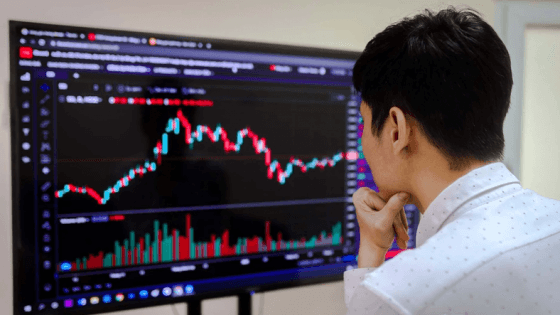
The domestic carbon market currently imposes no price fluctuation limits, with transactions quoted in VND. However, Vietnamese carbon credits are expected to emerge as a potential new asset class. (Illustrative photo)
Regarding market liquidity, Dr Le Xuan Nghia considered it a complex issue dependent on several factors. First and foremost, liquidity depends on government quota allocations. If regulatory bodies allocate quotas too generously—for example, granting 9.5 tonnes of quotas to a business emitting 10 tonnes of CO₂—the demand to purchase offsets will be only 0.5 tonnes. If allocations are tightened to 7 tonnes, the business will be forced to purchase 3 tonnes on the market. Tightening quota allocations will drive trading demand and enhance liquidity.
Second is whether speculative trading is permitted. To establish a true market, policies must enable investors to enter, buy during low-price periods, and sell during high-price periods, thereby creating continuous asset circulation and stimulating liquidity.
Third is the need for international participation rather than restricting activity exclusively to domestic entities.
Finally, commercial bank interest rates play a critical role. Businesses purchasing carbon credits or quotas require capital and bank financing. High interest rates will hamper liquidity, not only in the carbon market but across financial markets as a whole.
Even during the current pilot phase, policymakers must account for these factors to boost liquidity. Only then can the market operate dynamically upon official rollout, avoiding sluggishness that could diminish motivation for green transition, Dr Le Xuan Nghia emphasised.
The Vietnam Carbon Forum 2026 takes place as Vietnam enters a pivotal phase in establishing and developing its carbon market, shifting focus from drafting policy frameworks toward actual operational execution.
Over recent years, Vietnam has progressively refined its legal and policy frameworks for greenhouse gas mitigation and domestic carbon market creation, while expanding international cooperation on transferring emission reduction results and carbon credits.