VIETNAM CHAMBER OF COMMERCE AND INDUSTRY
Liên Đoàn Thương Mại Và Công Nghiệp Việt Nam
Wed, Oct 16, 2024, 02:35:00
At a conference on October 4 to review the province’s economic and social performance in the first nine months and discuss solutions to reach 2024 targets, Nguyen Tien Hai, Secretary of Ca Mau Party Committee, noted that as the remaining time of the year proves limited, Ca Mau’s entire political system needs to join efforts to radically clear bottlenecks and maximise resources to achieve the highest possible results.
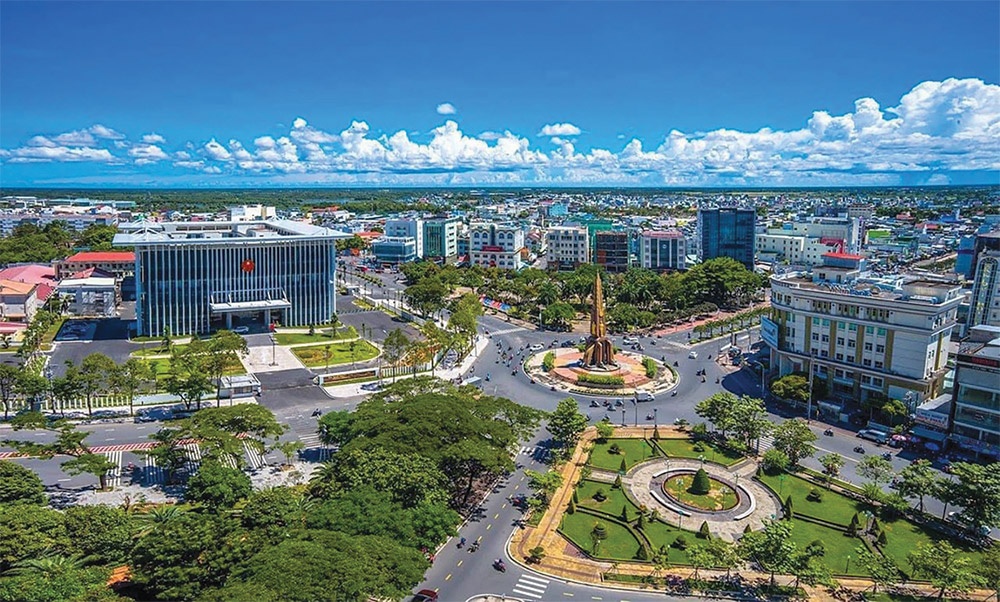
| Ca Mau aims to become a fairly developed locality in comparison to the rest of the country |
Hai also called on all levels and sectors to coordinate closely, act flexibly, and take suitable approaches with the highest determination to successfully complete 2024’s set targets.
According to the General Statistics Office, the province’s regional GDP for the first nine months of 2024 is estimated to have surged 6.45 per cent on-year. Specifically, agriculture, forestry, and fisheries grew by 3.3 per cent, industry and construction by 7.43 per cent, and the services sector by 8.4 per cent.
Despite facing the most impacts from climate change in the delta region, and amid infrastructure challenges, Ca Mau’s key advantages in seafood, tourism, and renewable energy have been clearly identified by the provincial government as Ca Mau is committed to be able to best avail of local potential to attract investment resources, develop local economy and society, aiming to carve a spot among fairly developed localities in the country by 2030.
Towards this goal, Ca Mau aims to spur breakthroughs in transport infrastructure, including preparing for the Ca Mau-Dat Mui Expressway project, upgrading National Highway No.1 and the Ho Chi Minh Trail section passing through the province, and especially upgrading Ca Mau Airport.
Developing expressways as well as inland waterway and maritime transport - particularly Hon Khoai port - are also critical, along with developing local industrial zones, tourism infrastructure, urban infrastructure, and disaster prevention infrastructure to adapt to climate change.
Ca Mau is currently focused on implementing its provincial master planning for the rest of the decade, with a vision to 2050, which is awaiting approval. Along with this, the primary task is to build appropriate policies to mobilise resources for marine economic development.
The focus includes investing in the comprehensive Hon Khoai Port, Nam Can Economic Zone, and a power export project after getting approval from relevant management authorities, along with developing renewable energy.
The broader vision is to transform Ca Mau into a national hub for the marine economy. This includes investment in Hon Khoai Port and Nam Can Economic Zone as stated above, and Ong Doc River Port, alongside the development of coastal industrial and urban areas.
Having in place high-tech, efficient, and sustainable aquaculture is also set a key focus, with the application of science, technology, and innovation in post-harvest preservation and deep processing to heighten the added value of marine products.
A location bordered by the sea on three sides, with a coastline stretching 254km and a natural area surpassing 5,200 square kilometres, accounting for 13 per cent of Mekong Delta region, Ca Mau boasts bountiful advantages to become a hub for seafood and food processing at both the regional and national levels.
The province also has great potential for developing renewable energy and innovative types of tourism, such as ecotourism and agricultural tourism. The province’s fishing grounds span approximately 80,000sq.km and are rich in aquatic resources. Alongside this, Ca Mau houses more than 300,000ha of aquaculture areas. Its coastal mangrove forests and the U Minh Ha Melaleuca forests have been recognised by UNESCO as a World Biosphere Reserve and a Ramsar site.
The combination of renewable energy sources such as onshore and offshore wind power, solar, and biomass holds significant potential, creating opportunities for Ca Mau to export electricity to diverse neighbouring countries.
Leveraging its geographical advantage, Ca Mau is determined to bolster its tourism brand, particularly turning Ca Mau Cape national tourism attraction into one of the region’s leading centres for ecotourism buoyed by unique mangrove forest experiences, making it a significant destination on the Mekong delta’s tourist routes.