VIETNAM CHAMBER OF COMMERCE AND INDUSTRY
Liên Đoàn Thương Mại Và Công Nghiệp Việt Nam
Thu, Nov 12, 2020, 08:14:00
Over the past years, the implementation and decentralisation of the State budget management has ensured that national financial resources are mobilized and used effectively. Thanks to that, it has affirmed the role of the National Assembly, increasing the activeness of the People's Councils at all levels in deciding budget estimates, allocating and approving budget statements. However, there are certain risks.

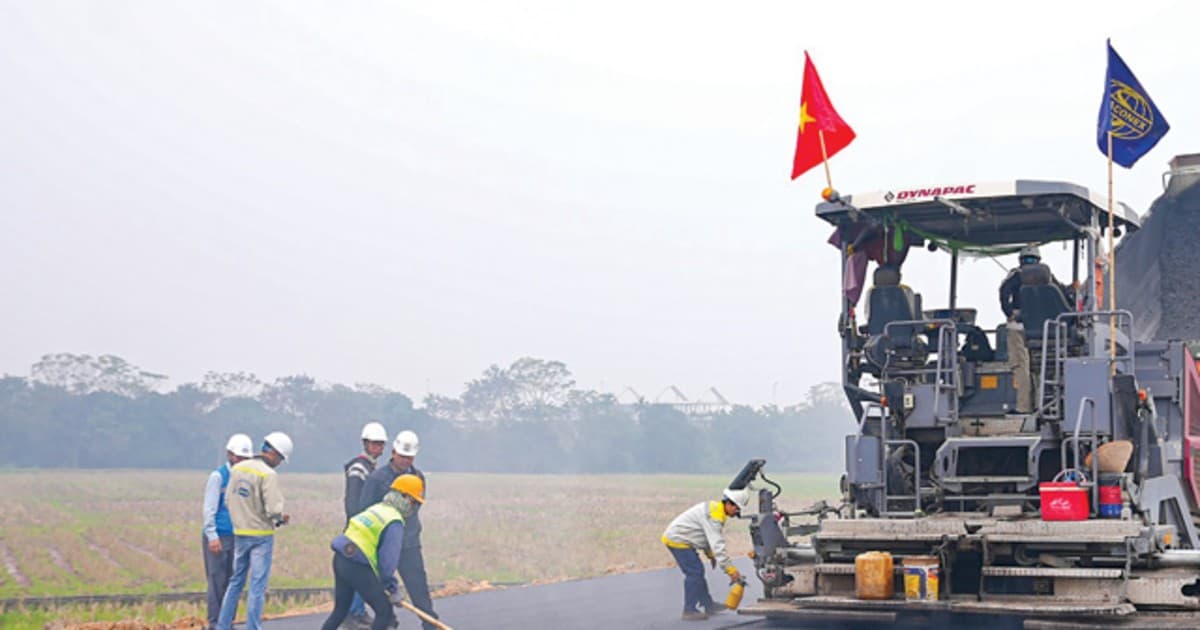
The number of localities to self-balance their budgets has increased. Photo: T.Linh
A strong breakthrough
The 2002 State Budget Law has further decentralised between the central and local budgets, following the principle that the central budget holds important sources of revenue and must cover major expenditures. Thanks to that, before 2004, there were only five provinces and cities able to balance their budgets and regulate the central budget,the period 2004 - 2007 there were15 localities; in the 2007-2010 period, there were 11 localities and in 2019 there were 16 localities.
In 2004, only three provinces and cities, Hanoi (over VND24 trillion), HCM City (over VND50 trillion), and Ba Ria - Vung Tau (over VND12 trillion) withrevenues over VND10 trillion VND. By 2010, there were10 localities with the revenue of over VND10 trillion, of which two localities topped VND100 trillion are Hanoi and HCM City. By 2019, the whole country has 18 provinces and cities with revenues of more thanVND10 trillion.
The restructuring of State budget revenues and expenditures according to the budget decentralisation has positively contributed to the results of budget revenues and expenditures, makingan important impact on socio-economic development goals. The review and decentralisation of the revenues to the locality has created a driving force for timely exploitation of revenue sources.
Recently, the study of the implementation of financial mechanisms for big cities under the 2015 State Budget Law has empowered major provinces and cities to decide on additional revenues and expenditures for some additional revenue and expenditure policies for salary policies.These localities can decide to spend investment with higher authority than the other localities, step by step attaching powers to tighter responsibilities, creating motivation as well as pressure to restructure local budgets anduse local budgets are more effectively in accordance with specific characteristics tosupport economic development for abetter local society.
Thus, from 2020, the State Budget Law has created a breakthrough in budget formulation, implemention and management, enhancing roles and responsibilities, creating proactivity for all levels of local governments in caring, nurturing and exploiting revenue in localities.
According to Vo Thanh Hung - Director of the State Budget Department, the Ministry of Finance, giving localities the right to decentralise, allocating budget expenditures and budget expenditures in association with public needs has gradually increased the efficiency and effectiveness of budget spending associated with local socio-economic characteristics, creating a driving force for publicity, transparency and monitoring of budgets of organisationsand local communities, improving the efficiency of budget expenditure.
Strengthen the decisive role of the central budget
The process of implementing budget decentralisation also reveals certain risks. That is the decisive role of the central budget, reducing the ability and orientation of the central budget, reducing the ability to invest in key and breakthrough projects for economicdevelopment. In addition, due to the scope of resources the local government is entitled to, especially for provinces and cities that receive supplementary amounts from the central budget as well as the relatively specific decentralisation mechanism (not divided by taxes, which are disaggregated by total revenues in the locality) makes the role of local governments in determining revenue sources and spending assignments relatively limited. Meanwhile, the size of central budget expenditure tends to decrease gradually and stay below half of total State budget expenditure.
Many economists believe it is necessary to study to revise the mechanism of revenue decentralisation - budget spending tasks towards ensuring the decisive role of the central budget, especially in the current context. There is a suggestion it is necessary to study and amend a number of provisions of the State Budget Law on budget decentralisation to strengthen the leading role of the central budget, ensuring the proportion of central budget revenue is about 60 - 65 % of total State budget revenue; revenue increases are only used to cutoverspending and form some revenues associated with spending tasks such as education and health.
In order to limit the current shortcomings, Vo Thanh Hung said that it is necessary to study and revise the mechanism of revenue decentralisation - budget spending tasks in the direction of ensuring the decisive role of the central budget, encouraging the creative initiative and accountability of local governments.
In principle, it is still necessary to concentrate large and important sources of revenue on the central budget. Localities exploit and nurture revenue sources associated with the local economy and proactively balance budgets. To perfect the mechanism of additional budgeting among budgets at all levels, it is necessary to perfect the system of principles of targeted addition, and restriction of asking and giving.
In a recent study, Truong Ba Tuan - Deputy Director of the Institute of Financial Strategy and Policy (Ministry of Finance) also gave some recommendations to overcome and handle shortcomings in the issue of budget decentralisation. In particular, it is necessary to strengthen fiscal potential of local governments on the basis of continuing to reform tax policies related to housing and land; decentralised fees and charges for local. Accordingly, Vietnam can study the replacement of agricultural land use tax and non-agricultural land use tax with property tax policy in accordance with the principles that are recognisedand widely applied in other countries to ensure the creation of stable financial resources for the locality.
According to Tuan, the experience of other countries shows that, in the decentralisation process, if only focusing on solving the collection but ignoring the expenditure task, it will be difficult to achieve efficiency and may cause a burden of spending for the central government. Vietnam needs to continue to review governmental decentralisation of budget spending tasks, ensuring that the central budget is focused on important, essential, inter-regional or regional spending tasks.