VIETNAM CHAMBER OF COMMERCE AND INDUSTRY
Liên Đoàn Thương Mại Và Công Nghiệp Việt Nam
Tue, Nov 24, 2026, 23:44:00
The 2026 Leading Maritime Cities of the World ranking, published by DNV and Menon Economics, marks a notable milestone as both of Vietnam's representatives, Hanoi and Ho Chi Minh City, made the list.
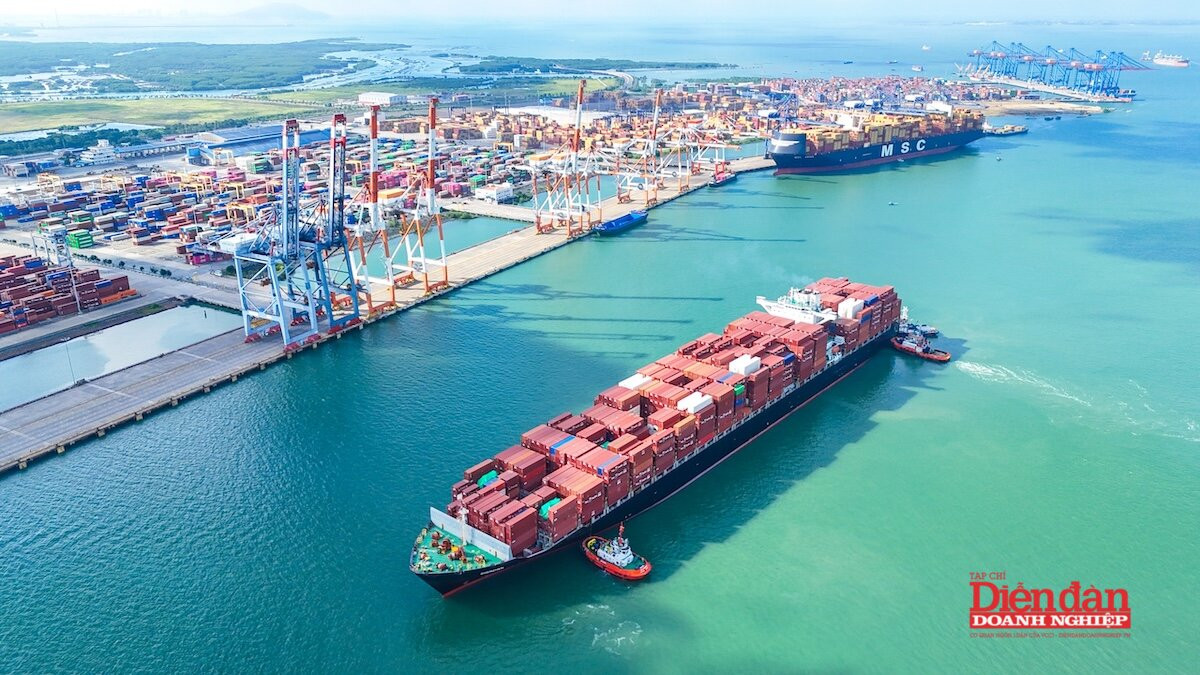
Hanoi and Ho Chi Minh City enter the top 50 leading maritime cities in the world in 2026
The maritime ecosystem creates competitive advantage
According to the ranking, Hanoi stands at 47th, while Ho Chi Minh City ranks 48th out of the 50 honored cities. This is the first time Vietnam's two major economic centers have jointly entered the list, demonstrating the country's increasingly prominent role in the global maritime value chain.
Selected from more than 15,000 cities worldwide, the ranking evaluates cities' maritime capabilities based on five pillars: shipping; finance and law; maritime technology; ports and logistics; and attractiveness and competitiveness. Each pillar is measured by multiple indicators, ranging from green transition and digitalization to the business environment and innovation capacity.
Accordingly, the strength of a maritime city lies not only in port scale or cargo throughput, but is also determined by a comprehensive ecosystem where infrastructure, policies, commercial services, finance, technology, and human resources are synchronously connected. This is also the distinction between a city with a large seaport and a maritime hub capable of generating added value on a global scale.
In this picture, Hanoi and Ho Chi Minh City each hold distinct advantages. Hanoi scored high on indicators related to the presence of headquarters of maritime corporations, listed shipping enterprises, as well as fleet management and ownership activities. Meanwhile, Ho Chi Minh City stands out for its port operation capacity, ranking among the Top 10 global cities in container throughput by TEU.
The joint presence of both cities in the ranking shows that Vietnam's maritime development potential is not concentrated solely in coastal localities, but is also supported by major economic, financial, and administrative centers. While Ho Chi Minh City holds advantages in port systems and logistics operations, Hanoi can leverage its role as a hub for management, administration, business networking, and maritime support services.
However, the gap between the two Vietnamese representatives and the leading group also underscores the need to upgrade competitiveness. Seaport development must go hand in hand with enhancing fleet capacity, expanding maritime transport services, and developing maritime finance, insurance, legal services, technology, and specialized human resources. These are crucial links to help domestic enterprises not only participate in cargo transportation, but also gradually capture higher value-added segments in the international maritime service chain.
In the leading group, Singapore continues to hold the No. 1 spot thanks to its comprehensively developed maritime ecosystem, spanning fleet management, smart seaports, fuel supply networks, and specialized support services.
This is the seventh consecutive time Singapore has topped this ranking. Beyond holding the overall No. 1 position, Singapore also leads in 3 out of 5 key maritime pillars: shipping; ports and logistics; and attractiveness and competitiveness. Notably, the city is also a preferred destination for numerous maritime enterprises and research and development (R&D) facilities. Specifically, Singapore is currently home to the headquarters of more than 200 international shipping groups, alongside a diverse network of maritime service providers.
According to 2025 data, container throughput at the Port of Singapore reached a record 44.66 million TEU, alongside 3.22 billion GT in vessel arrival tonnage and 56.77 million tonnes of marine fuel supplied. Singapore continues to maintain its position as the world's largest bunkering port and boasts a network connecting over 600 seaports.
Notably, Singapore's advantage stems not only from operational volume, but also from its ability to concentrate high value-added services. Attracting over 200 international shipping groups to set up headquarters shows that the city has built a favorable business environment for enterprises to choose as their global maritime operations hub. Alongside this is a well-developed system of finance, insurance, legal consulting, shipbroking, and fuel supply services, forming an end-to-end support network for maritime transport.
For Vietnamese import-export enterprises, Singapore remains a vital link in the international maritime transport network, particularly for shipping routes connecting Southeast Asia with Europe, the Americas, and global markets. However, the growth of this maritime hub also highlights that the competitive challenge is not merely about increasing port capacity, but about the ability to provide end-to-end services, reduce transaction costs, and facilitate cross-border trade.
Trailing Singapore are Shanghai, London, Rotterdam, and Tokyo, respectively. Notably, Asian cities account for 3 of the top 5 positions, underscoring the region's growing role in the global maritime industry.
Among them, Shanghai is a noteworthy example of combining port scale, shipping capacity, shipbuilding industry, technology, and logistics networks. The city not only develops large-scale container ports, but also promotes technology application in port management and operations, builds smart supply chains, and strengthens connections with manufacturing and commercial hubs. Its rise to second place shows that volume advantages generate greater momentum when backed by technological capabilities and a maritime industrial ecosystem.
Meanwhile, Rotterdam demonstrates a different development path. Beyond being a major European seaport, Rotterdam is also a center for logistics, energy, and maritime technological innovation. The city focuses on developing smart ports, automation, energy transition, and emission-reduction solutions in shipping. Combined with a system of specialized services, its ability to connect inland waterway, rail, and road transport networks has helped Rotterdam expand its service reach far beyond the port area.
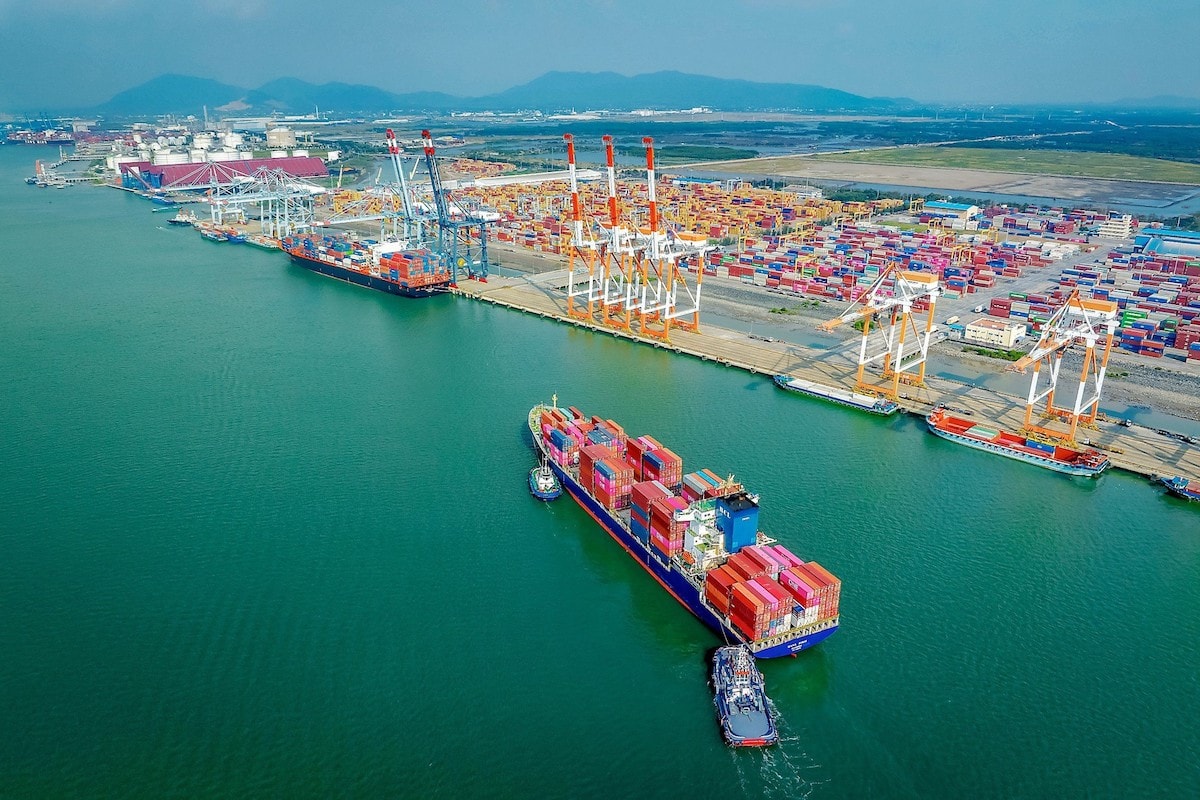
Ports are the foundation, yet transport capacity, financial-legal services, technology, innovation, and the ability to attract businesses are the decisive factors determining the depth of the ecosystem.
Comparing with these hubs reveals that while each leading city has built its own distinct advantages, they share the common approach of developing the maritime sector in an integrated manner. Ports are the foundation, yet transport capacity, financial-legal services, technology, innovation, and the ability to attract businesses are the decisive factors determining the depth of the ecosystem.
Expanding space for enterprises
For Vietnam, the fact that Hanoi and Ho Chi Minh City have jointly entered the Top 50 for the first time is a positive signal; however, to advance further on the world maritime map, the requirement is not only to continue investing in seaport infrastructure, but also to elevate the capacity of the entire service chain.
First, it is necessary to strengthen maritime transport capacity and the domestic fleet, creating conditions for Vietnamese enterprises to expand their market share in transporting import-export goods. When fleet capacity and transport services improve, domestic businesses will have greater opportunities to participate more deeply in the supply chain, reduce reliance on foreign shipping lines, and enhance proactiveness in logistics operations.
Alongside this, developing financial, insurance, legal, shipbroking, and ship management services is an indispensable requirement. These are areas capable of generating substantial added value, yet they also demand a transparent business environment, appropriate policy mechanisms, and deeply specialized human resources. Forming a specialized service ecosystem will help Vietnam gradually attract international maritime enterprises while simultaneously strengthening the capabilities of domestic firms.
Another requirement is to accelerate technology application and green transition in port, shipping, and logistics operations. Digitalizing operational processes and connecting data among seaports, transport enterprises, shipping lines, regulatory agencies, and cargo owners will help reduce logistics time and costs. Meanwhile, investing in clean energy infrastructure, next-generation marine fuels, and emission-reduction solutions will help Vietnam's maritime hubs adapt to the increasingly stringent standards of the international market.
In particular, it is necessary to create development space and incentive mechanisms for domestic maritime enterprises to participate more deeply in high value-added sectors. Alongside port operators and shipping companies, businesses providing logistics, technology, finance, insurance, consulting, and workforce training services need to be connected within a unified ecosystem.
The recognition of Vietnam's two major cities on the international ranking is therefore not only an affirmation of the capabilities of the domestic port system and enterprises, but also an opportunity for the maritime industry to more clearly identify untapped potential. Lessons from Singapore, Shanghai, and Rotterdam show that to become a globally competitive maritime hub, Vietnam needs to shift from relying on geographical advantages and operational volume to capabilities in service delivery, technology, and added value.